BigCi Residency 2026 - Landscapes of Damage and Resilience
Reflections on a month-long residency at Bilpin International Ground for Creative Initiatives (BigCi), July-August 2026
My proposal for my residency at BigCi was to explore wildfire and regeneration, particularly in the aftermath of the devastating ‘black summer’ wildfires of 2019-20. When I first thought about applying for the residency, my first port of call was a Google image search (a picture speaks a thousand words and all that). The photographs that appeared on my screen were either of utterly beautiful, “pristine” nature - all sweeping vistas and incredible scenery. Or, they were of apocalyptic fires and devastation - red skies, billowing smoke and blackened trees. Clearly there was truth in both of these scenes - but as an artist interested in finding the shades of grey within seemingly black-and-white polarities, I couldn’t help but think there was a more nuanced visual story which could be told about the landscape here.
Botanical cyanotypes
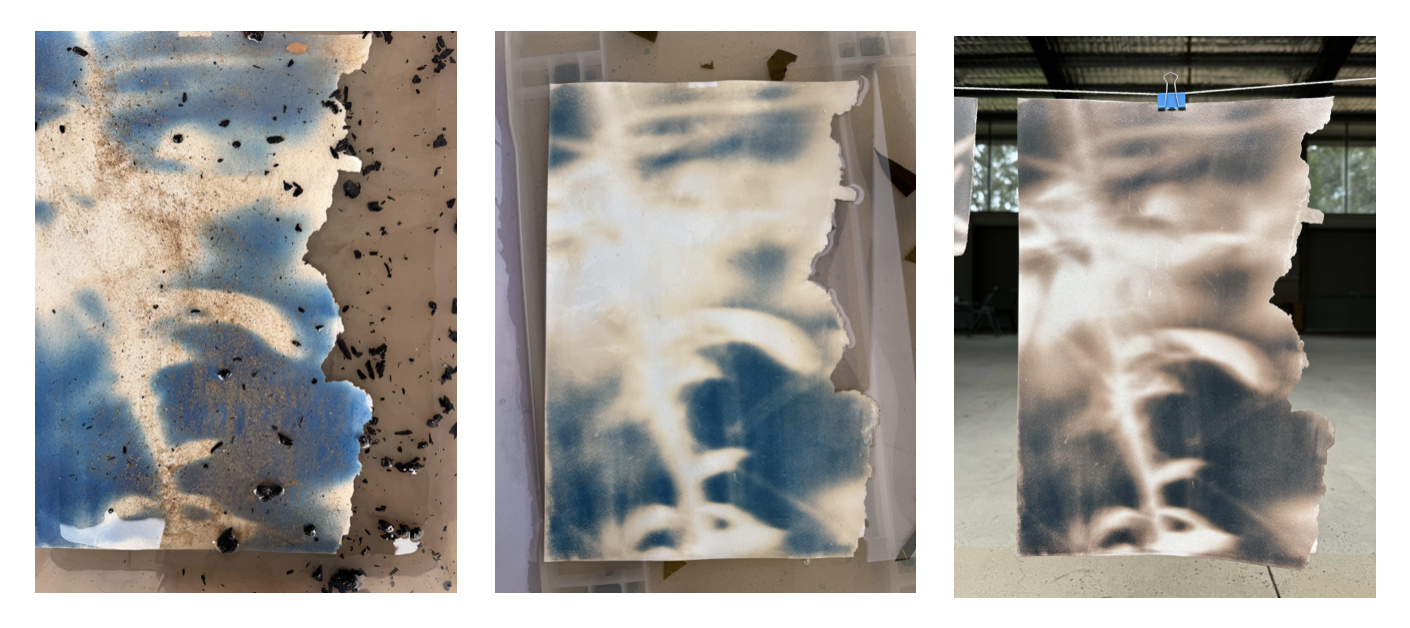
I wanted to use botanical cyanotype toning for my project for a number of reasons. It felt like a meaningful way to engage with the land, to learn about local plants and the ways in which the flora recovers and regenerates after fire. It would also push my practice forward as I would be using unfamiliar plants I had never had access to before. I had also discovered through experiments back in my studio at home that wood ash could be used as a bleach in the toning process. This felt like a way I could engage with elements of fire and damage, and resilience and regeneration in the image making process, embedding the physicality of both into the work.
My usual process with cyanotypes is to document a place using digital photography, then create negatives and use these to make cyanotypes. However, when I arrived I discovered that this wouldn’t be possible with the printer at BigCi. After an initial “what am I going to do now?!” moment, I was actually really glad about this, as it pushed me to think more creatively about how I engaged with the processes and materials, rather than relying on tried-and-tested methods.
Process
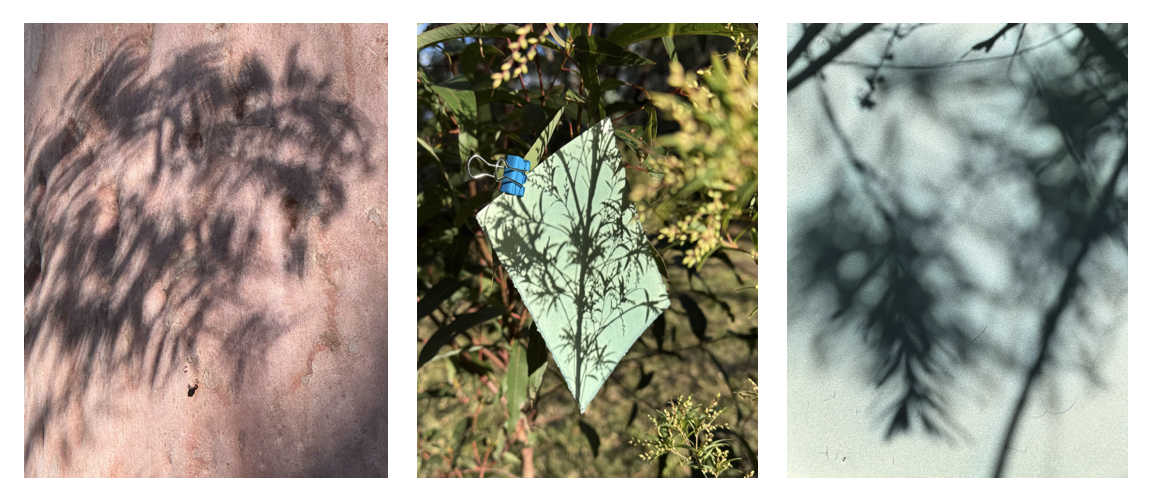
As usual, I didn’t have a clear image of a ‘finished piece’ in mind - and I started by following my curiosity. On our first morning Environmental Director Yuri took the group for an orientation walk around BigCi’s land. I was immediately transfixed by the quality of the shadows. Yuri mentioned that the air is particularly clear at this time of year (great for photography!) and the shadows had a wonderful depth and clarity which I have rarely seen anywhere else. I began experimenting with making cyanotypes with shadows of the plants around BigCi’s land. I found them more interesting than classic, crisp, neat-edged botanical cyanotypes, they were more abstract and enigmatic, particularly with the slight movements in any breeze which became part of the image.
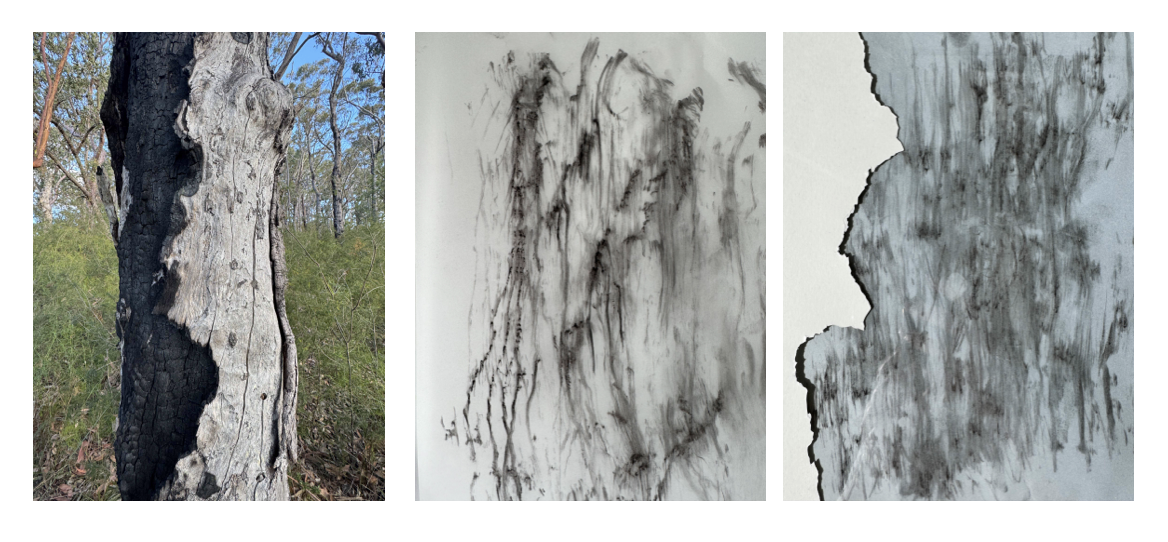
This felt like a good way to document the resilient flora, but I was unsure initially how to bring in the elements of fire damage visually. I started to think about different ways I could weave in visual elements of the burnt trees that scatter the landscape here. I started to focus on the shapes and textures, experimenting with cutting out the shapes of the burnt wood, and using found charcoal from burnt trees to make rubbings on tracing paper of healthy tree bark, and using these in the cyanotype process.
Inspiration from the landscape
Alongside working in the Art Shed, the huge shared studio space at BigCi, one of the absolute highlights of the residency were the off-track hikes with Yuri. I joined one conservation walk in the Gardens of Stone, and two exploratory treks plus a canyon hike in Wollemi National Park. I found the landscapes we encountered deeply inspiring, particularly the incredible rock formations.
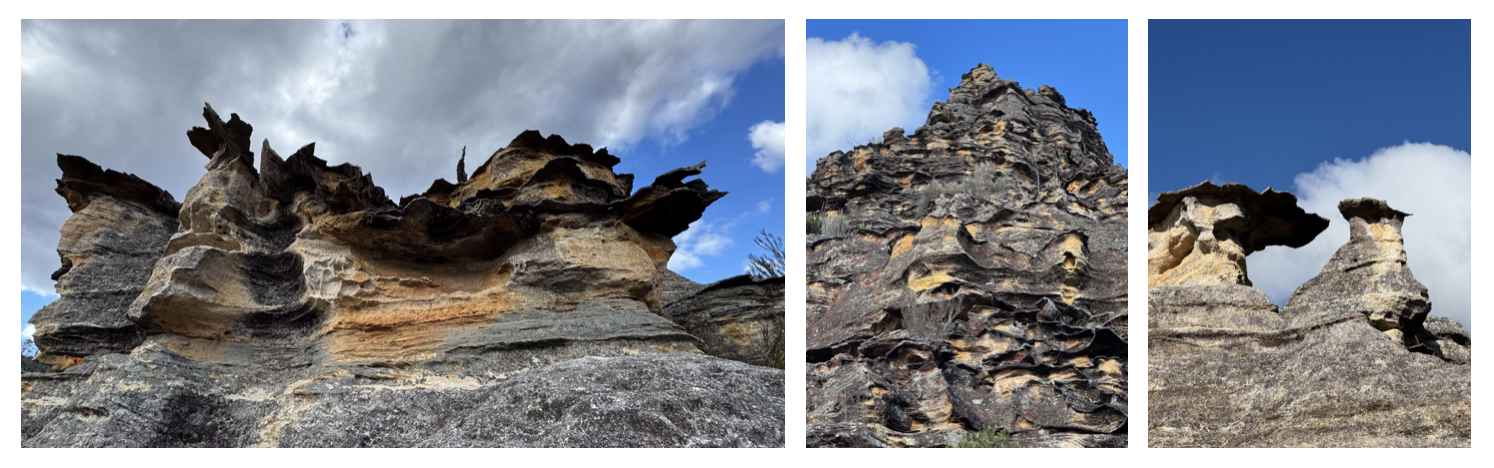
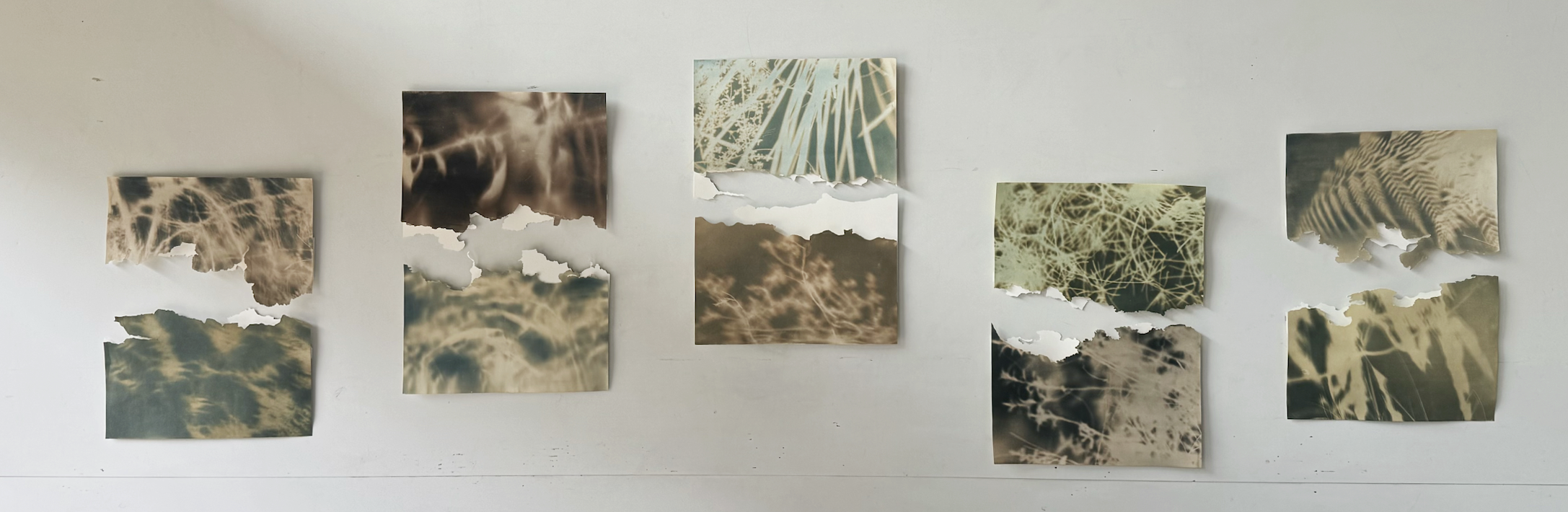
At some point in the process of making these shape-and-texture cyanotypes I realised that, in a different orientation, the shapes and textures of the trees were mirroring the shapes and textures of the rock formations, and I had unexpectedly created a series of landscapes.
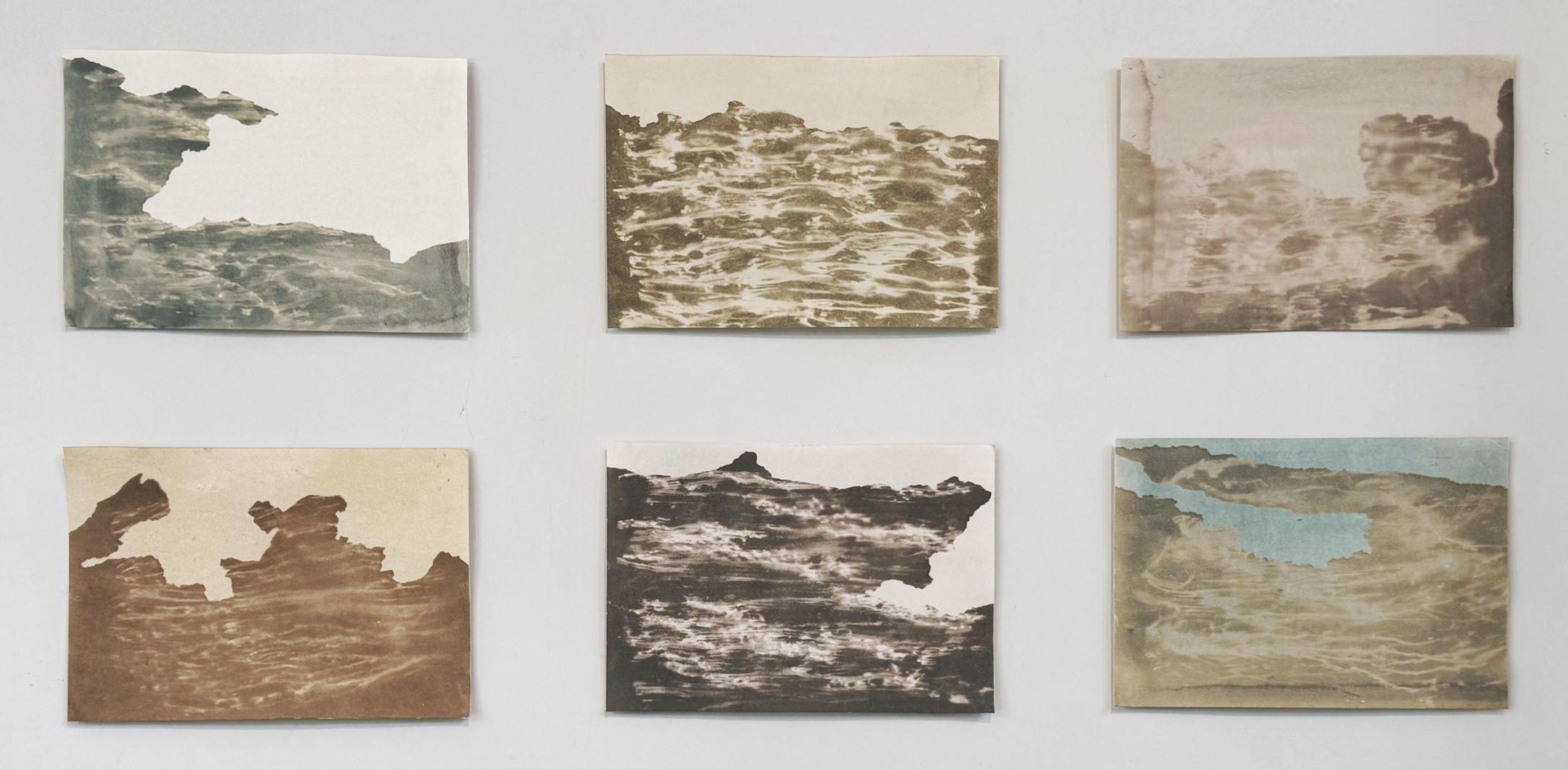
I was particularly struck by the fact that Wollemi has only been mapped aerially - it has been impossible to do so from the ground because the terrain is so rugged. So it is perhaps no surprise that another series of images became something slightly topographical in nature, with a feeling of an aerial view into gullies or canyons.
Toning
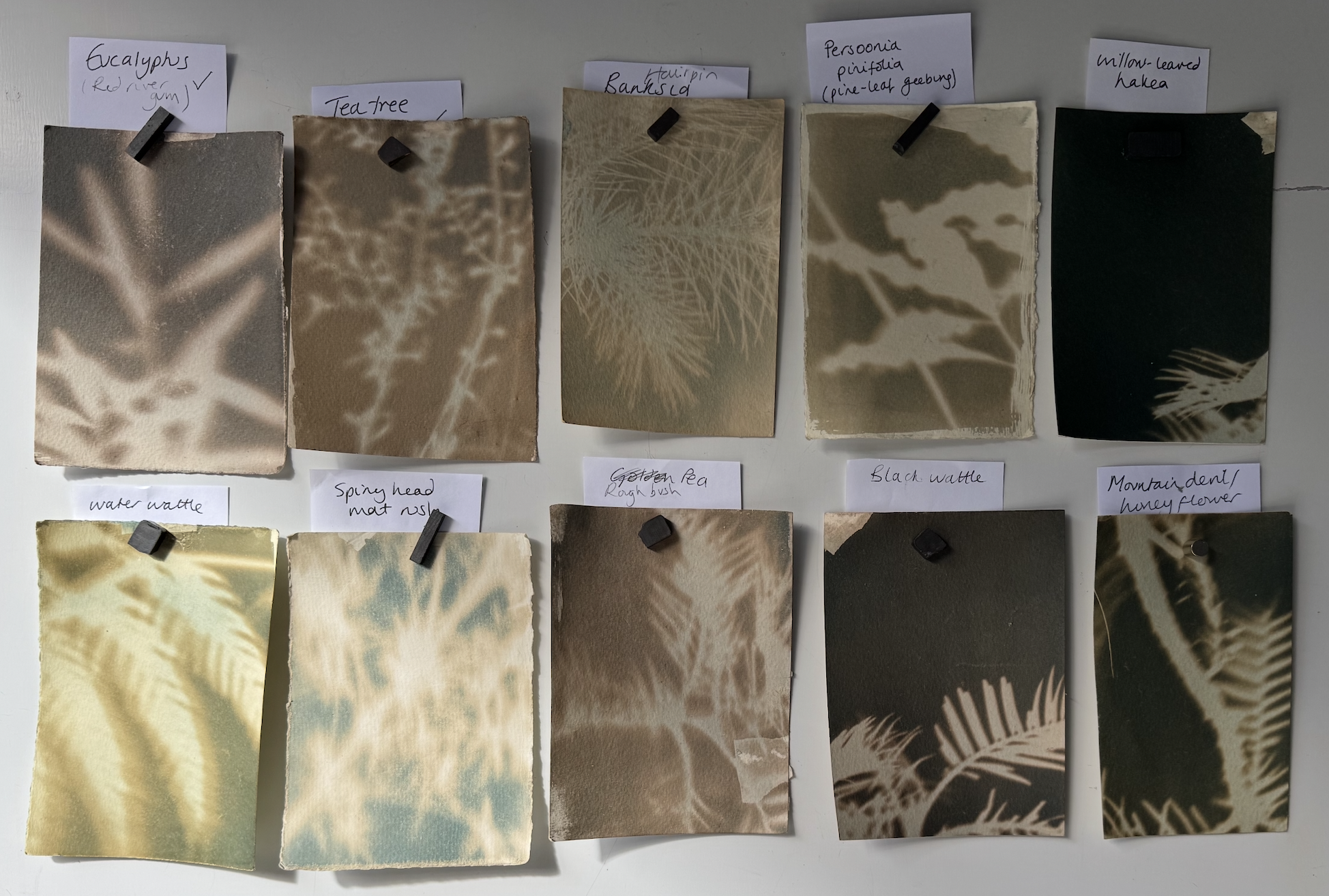
This ‘landscape’ quality was increased through the toning process, taking the images from a fairly uniform Prussian blue, to a beautiful range of colours and tones, ranging from yellow/green, through greys and deep browns, to almost black. I used 10 different plants to tones the prints, all gathered carefully from BigCi’s land (when I say carefully I mean only taken from healthy, abundant plants, and taking as little as possible for what I needed):
Eucalyptus
Water wattle
Black wattle
Hairpin banksia
Pine leaf geebung
Common tea tree
Willow-leaved hakea
Rough bush pea
Spiny head mat rush
Mountain devil/honey flower
All of these plants have certain qualities that help them cope with fire - epicormic growth, where buds just under the surface of the bark sprout immediately after fire if the canopy is damaged; seeds that are opened by the heat of fire, allowing for speedy re-growth; or protected rhizomes underground. I absolutely loved the process of learning to identify the different plants, and the process of toning is nothing short of magic, as the plant tannins take hold on the paper and the different colours start to emerge. The residency ended up being equal parts art, botany and chemistry (which as someone with a masters in Arts and Ecology feels about right!)
Film - Landscapes of Fire and Resilience
The final visual element I created was a short film, in which I played with scale, creating ‘imagined’ landscapes by blending digital photographs of rock formations, extreme close ups of charcoal fragments, and the thriving eucalyptus which have so amazingly regenerated since the 2019-20 fires. To me, the blurring of the boundaries between fire damage and regeneration, rock and wood, the vast and the tiny, speaks to the interconnectedness of all of these elements within the ecosystem here.
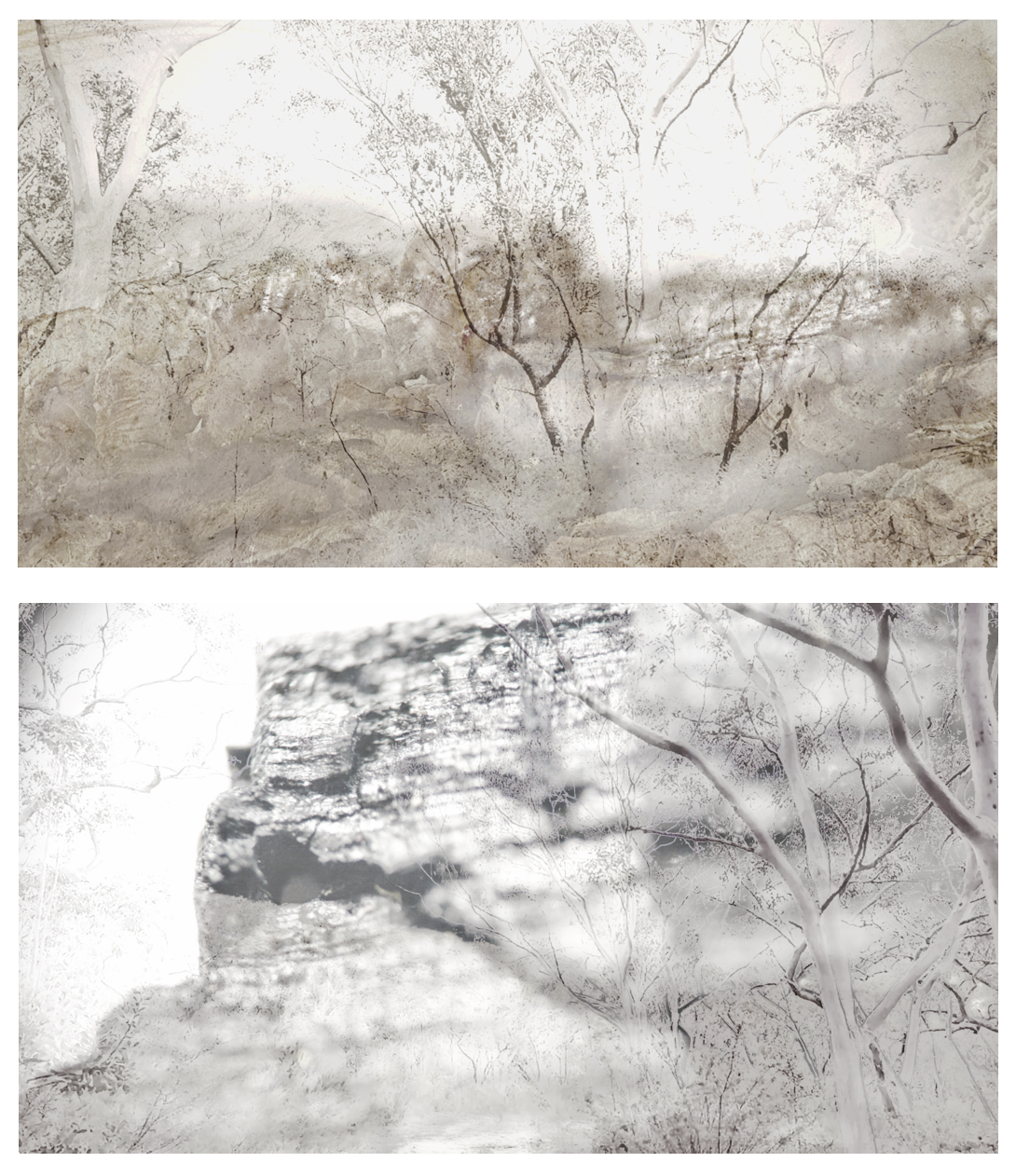
Film stills from Landscapes of Fire and Resilience
A note on fire
I’ll finish with a note on fire. I wrote the proposal for this residency in the spring of 2025, and at the time I described the possibility of wildfires in the UK as a “possible future threat”. Yet while I was in Australia, the UK experienced drought, relentless heatwaves and wildfires unprecedented in scale and number. So while this project began by looking at a particular landscape, it has increasingly felt connected to something much bigger and much closer to home.
Exploring the resilience of the Blue Mountains landscape left me feeling hopeful, but I don’t want that hope to come at the expense of acknowledging the damage that is happening because of the climate crisis. What I have found most compelling in this landscape is the coexistence of those two things: fragility and resilience, destruction and renewal, loss and hope. My working title for this body of work is Landscapes of Damage and Resilience, and I think that tension is really at the heart of it. These landscapes hold evidence of both what has been damaged and what is finding ways to survive, adapt and regenerate. For me, the work is an attempt to hold both of those things in view - without looking away from the damage, but without losing sight of the possibility of renewal.
~
The above is adapted from the talk I gave at the BigCi Open Day on 23rd August 2026. One of the questions I was asked in the Q&A for my talk was whether I had looked into indigenous fire practices and traditional land management. The answer is yes, but I’m in the very early stages of learning about this and didn’t feel qualified to talk about it in any depth. I’m currently listening to the audiobook of Fire Country: How Indigenous Fire Management Could Help Save Australia, by Victor Steffenson, which is a fascinating book and has opened my eyes to a whole host of associated topics, including the complexities and conflicts within different approaches to conservation. Further conversations with people I met in Australia have also broadened my understanding of different viewpoints on fire, conservation and ideas of wilderness. All of these conversations, thoughts, ideas and complexities are currently swirling around in my head and I’m sure will eventually percolate into wherever this work is heading next. Like all the best projects, this feels like just the beginning.
~
I would like to acknowledge the Dharug people, Traditional Custodians of the land on which this work was made, and pay my respects to their Elders past and present.